


Around the world, regulating bodies have begun to address the use of per- and polyfluoroalkyl substances (PFAS) materials in medical devices. Often termed “forever chemicals,” these synthetic chemicals do not break down over time, persisting in the environment and bioaccumulating in humans and animals.
Because PFAS materials have been linked to serious adverse health conditions and environmental harm, many industries are removing them from products. The challenge for the medical and other industries is finding suitable alternatives that are readily available and perform comparably in specific applications.

Silicone tubing has emerged as a proven, PFAS-free alternative for medical devices. In fact, medical-grade silicone even enhances biocompatibility, flexibility, and chemical inertness for non-invasive applications, like fluid transfer and pump systems.
For over 50 years, Vanguard Products has supplied customers with USP Class VI, FDA-grade medical silicone tubing that is manufactured in the USA. Learn more about the challenges PFAS chemicals present for medical devices, why medical-grade silicone is a compliant alternative, and the advantages it has for these applications.
The PFAS Challenge for Medical Devices
PFAS includes more than 15,000 synthetic chemicals. One example is fluoropolymers, such as PTFE, which were historically valued for their resistance to water, oils, and high temperatures, as well as low friction properties, making them highly effective for catheters, stents, and tubing liners.
More recently, public scrutiny and scientific research have caused regulators to study these materials and their impact more closely. A major determination is that PFAS chemistry relies on carbon-fluorine bonds that strongly resist breakdown, and contribute to health and environmental risks.
There have been several responses to these findings, including:

In the EU, REACH (Registration, Evaluation, Authorisation and Restriction of Chemicals) regulations comprehensively restrict PFAS chemicals.

The US EPA designated PFOA and PFOS as hazardous substances in April 2024, though the FDA has not restricted fluoropolymers in devices.

Major suppliers, including 3M, are in the process of phasing out PFAS manufacturing in the near future.
Does Silicone Have PFAS?
The short answer is no, silicone does not contain PFAS chemicals. Let’s look at the differences and how medical-grade silicone tubing stands out in particular.
Silicone vs. Fluoropolymers: Key Differences
As PFAS chemicals face expanding global bans, regulators are not imposing restrictions on silicone. Medical-grade silicone does not have the same concerns associated with fluoropolymers, and is commonly specified as a PFAS alternative.
- Silicone is made from silica, oxygen, carbon, and hydrogen, and does not contain fluorine. In contrast, PFAS chemicals are characterized by carbon-fluorine bonds.
- Unlike PFAS, which can persist indefinitely, silicone does not contain harmful degradation by-products, making it a safer choice for both the environment and human health.

USP Class VI Silicone Tubing and Biocompatibility Testing
USP Class VI silicone tubing meets the most rigorous plastic biocompatibility requirements for non-invasive contact, as follows:
- USP Class VI testing includes systemic toxicity, intracutaneous reactivity, and implantation studies.
- Both platinum cured silicones and peroxide cured silicones can be used in various non-invasive medical applications.
- For non-invasive tubing, silicone meets or exceeds fluoropolymer performance while eliminating PFAS compliance risks.

TIMELINES FOR COMPLIANCE
Manufacturers face a narrow window for this transition, with regulatory deadlines and supply exits already underway. For example:
The Stockholm Convention has restricted production and use of several PFAS chemicals as far back as 2009 and has added PFOA PFHxS restrictions.

EU Persistent Organic Pollutant (POP) regulation follows and extends the Stockholm Convention restrictions on PFAS. Its exemption for PFOA in invasive devices ended in July 2025.

The US EPA's deadline for reporting PFAS use in the USA was May 8, 2025.
Several US states have enacted restrictions as well. Maine and Minnesota plan summary bans by 2032, and Colorado and Connecticut target 2026–2028.
Silicone as a PFAS-Free Alternative
Without sacrificing performance, medical-grade silicone tubing meets regulatory standards — including USP Class VI and ISO 10993 criteria for:

Biocompatibility

Wide temperature tolerance

Sterilization techniques, including autoclave, gamma, and EtO
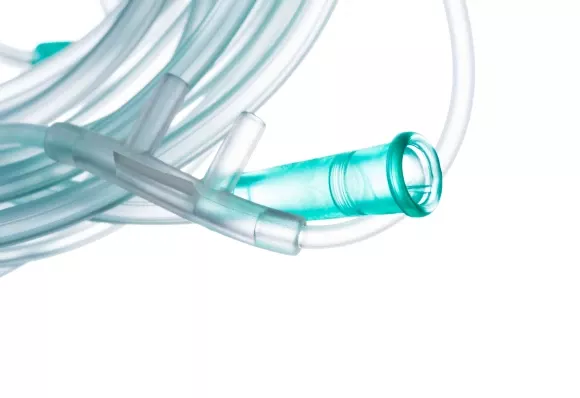
Vanguard’s silicone medical tubing is chemically inert and translucent to preserve drug integrity and improve flow monitoring.
Some of the most common applications for PFAS-free silicone include peristaltic pumps, IV administration, drainage systems, and bioreactor fluid handling. For greater manufacturing utility, we offer several medical-grade silicone options, including:
Platinum and peroxide cured.
FDA 21 CFR 177.2600-compliant silicone.
NSF-51-certified grades.
35–70 Shore A hardness.
Medical-Grade Silicone Tubing From Vanguard
With technical expertise and precision capabilities, Vanguard Products supports compliant transitions for domestic medical device manufacturers at scale. For over 50 years, we’ve innovated the technologies behind seals, gaskets, and tubing for non-invasive medical applications.
Our engineering support services help customers identify cost-effective and materially suitable silicone alternatives to PFAS-based materials, while reducing qualification timelines. Our offerings meet requirements for USP Class VI status, FDA safety standards, and NSF-51.
Partner with Vanguard for PFAS-Free Medical Tubing
As PFAS regulations tighten around the world, medical device manufacturers face pressure to reassess material choices for tubing and fluid-handling components. PFAS restrictions and its associated supply volatility make silicone the strategic choice for non-invasive medical tubing.
Contact us or request a quote to learn about our USP-VI silicone supports compliant transitions for medical manufacturers.